GI TAGS AND EXPORT CERTIFICATES: What to Ask for When Buying a Carpet in India
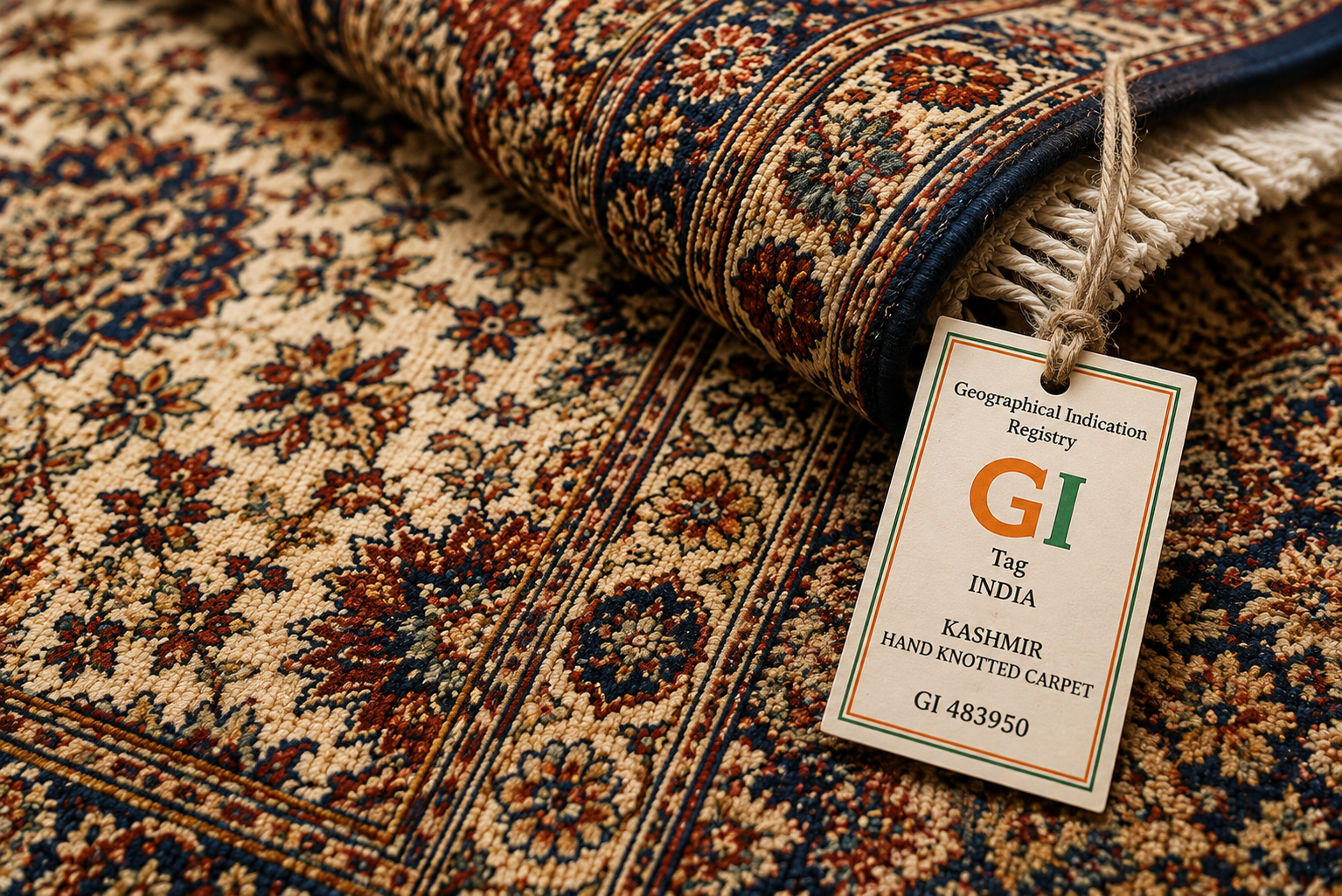
A certificate can make a carpet look authentic. But what exactly is that piece of paper certifying?
This is an important question because buyers today are more informed than ever. When purchasing an expensive carpet, it is natural to look for labels, certificates and documents that provide reassurance. But not every certificate proves the same thing—and some documents can easily be misunderstood.
A GI (Geographical Indication) tag identifies a product with a particular geographical origin where a specific quality, reputation or characteristic is associated with that location. In the Indian carpet industry, certain traditional carpet-producing regions and products have GI recognition.
But here is where buyers need to be careful: a GI tag does not automatically mean that a carpet is superior, antique, handmade or of a particular knot density. It relates primarily to geographical origin and the characteristics associated with that origin.
Export documentation is different. Depending on the circumstances, export documents may establish information relating to the shipment, exporter, origin or regulatory compliance. They should not automatically be interpreted as proof of the carpet’s age, craftsmanship or quality.
Explore our collection of traditional Persian and Indo-Persian carpets to discover timeless designs inspired by centuries of carpet-making heritage.
So, what should you actually ask a carpet dealer?
First, ask where the carpet was made. This sounds obvious, but it is one of the most important questions. A carpet made in India using a traditional Persian design is an Indian carpet—it should not simply be described as a Persian carpet.
Second, if a GI claim is being made, ask what GI applies and what it actually covers. Do not assume that the presence of a GI reference guarantees every aspect of the carpet.
Third, ask for proper documentation with your purchase. For a valuable carpet, the invoice should clearly describe the carpet and its stated origin. Keep photographs, specifications and any supporting documents provided by the seller.
And perhaps the most important point: do not let paperwork replace knowledge.
A certificate is useful. A properly documented purchase is even better. But ultimately, the carpet itself—its construction, materials, workmanship, design and provenance—should make sense.
After all, buying a carpet is not a document-collecting exercise. You are buying a piece of craftsmanship, and you deserve to know exactly what it is.

Founder of Carpet Kingdom, Curating Handmade Rugs for Over 125 Years